Manga is the Japanese word for comics. It is read right to left, covers many genres, and differs from Korean manhwa and Chinese manhua in origin, reading direction and format.
If you are searching for manga, this page gives you the short version first and the details after.
If you’ve spent any time online in the last few years, you’ve probably noticed manga popping up everywhere. Bookstore shelves have entire sections for it now. Streaming services keep greenlighting anime based on it. And a huge chunk of the internet’s reading habits have quietly shifted toward these black-and-white Japanese comics that somehow manage to tell stories no other medium quite captures the same way.
But what actually is manga, why has it grown so fast outside Japan, and where should a new reader even start? Let’s get into it.
What is manga?
Manga refers to comics and graphic novels created in Japan, typically drawn in black and white and read right to left. That last part trips up a lot of first-time readers. Pick up a physical volume, and you’ll notice the “back cover” is actually the front. The story flows in the opposite direction from what most Western readers are used to.
Beyond the format, manga covers just about every genre imaginable. Action, romance, horror, slice of life, sports, cooking, mecha battles, quiet character dramas about grief. There’s no single “manga style,” even though people often picture the same wide-eyed character designs. The visual language shifts a lot depending on the artist and the genre.
Many readers ask about manga before they pick where to start, so this page answers it plainly.
What is the history of manga?
Manga’s roots go back further than most people expect, with scroll paintings and woodblock prints from centuries ago already experimenting with sequential storytelling. The modern industry as we know it took shape after World War II, largely credited to Osamu Tezuka, the artist behind Astro Boy, who helped establish the visual grammar that manga still uses today: expressive faces, dynamic paneling, cinematic pacing borrowed from film, know more click here.
From there, manga grew into a massive Manga publishing industry in Japan, serialized weekly or monthly in thick anthology magazines before getting collected into the tankobon volumes readers are familiar with now. Series like Dragon Ball, One Piece, and Naruto turned manga into a global export, and the anime adaptations that followed only widened the audience.
Keep in mind that manga can change as sites update, so check the details again before you decide.
What is the difference between manga, manhwa and manhua?
New readers often lump all Asian comics together, but there are real differences worth knowing:
- Manga comes from Japan and reads right to left, usually in black and white.
- Manhwa comes from Korea, often reads left to right, and is frequently released in color as a webtoon format built for scrolling on a phone.
- Manhua comes from China and shares some stylistic overlap with manhwa, though the storytelling conventions differ.
If you’re curious about how the Korean side of manga this compares, it’s worth checking out Korean webtoons and seeing how the full-color, vertical-scroll format changes the reading experience compared to a traditional panel layout.
In short, manga comes down to knowing what you want to read and choosing a safe, legal way to read it.
Why has manga become so popular?
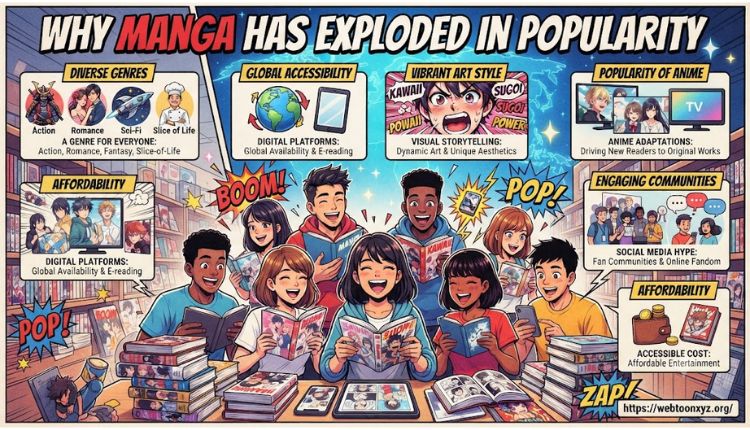
A few things collided at once to push manga into the mainstream outside Japan:
Digital access: Readers no longer need to import physical volumes or track down scanlations on sketchy forums. Legal digital platforms made entire back catalogs available instantly.
Anime as a gateway: A lot of readers get hooked on a story through its anime adaptation, then go looking for the manga to catch up ahead of the show or read an ending the anime hasn’t reached yet.
Genre diversity: Manga doesn’t box itself into superhero stories the way a chunk of Western comics history did. There’s a for almost any mood or interest, which means the entry point is wider than people assume.
Social media discovery: Short clips, panel Manga screenshots, and fan discussions on platforms like TikTok and Twitter have turned recommendations into a constant, low-effort discovery loop.
Which manga genres should you explore?
If you’re not sure where to start, genre is usually the easiest filter:
- Shonen, action-driven stories aimed at a younger audience, built around themes of friendship, training, and escalating power. Think tournament arcs and world-ending stakes.
- Shojo, romance and relationship-focused stories, often centered on emotional growth and coming-of-age themes.
- Seinen, aimed at readers, with more mature themes, morally gray characters, and slower pacing.
- Josei, similar maturity level to seinen but told from a female perspective, often grounded in realistic relationships and workplace life.
- Isekai, a huge trend in recent years, where a character gets transported to another world, usually fantasy-based, and has to navigate it.
Where is the line between manga and webtoons?
One thing that confuses newer readers is how much crossover there is between traditional manga and the newer webtoon-style platforms built for phones. Sites built around vertical scrolling and full color have pulled in readers who might never have picked up a physical volume. If that’s more your speed, it’s worth browsing something like webtoons built around genre variety, which lean into that mobile-first reading habit rather than the traditional printed page format.
There’s also a growing number of platforms trying to capture the same audience under slightly different names and spellings. It’s not uncommon to see people searching for terms like alternative webtoon spellings and platforms simply because the naming across this space isn’t standardized yet, and readers end up bouncing between similarly named sites while looking for the same kind of content.
How do you start reading manga?
If manga is new to you, here’s a simple approach:
- Pick a genre, not a title: Figure out whether you want action, romance, horror, or something quieter, then look for a well-regarded series in that lane.
- Start with a completed or well-established series: Ongoing series can be great, but a completed one gives you a full arc without the wait between releases.
- Get used to right-to-left reading: It only takes a chapter or two before it feels natural.
- Read reviews or summaries before committing to a long series: Some run for hundreds of chapters, so it helps to know upfront whether the payoff is worth the time investment.
- Branch into adjacent formats once you find your genre: If you like a particular story type in manga, there’s a good chance a manhwa or webtoon version of something similar exists too, often with a different pacing style worth comparing.
How far does manga’s cultural reach go today?
Manga isn’t a niche hobby anymore. Publishers report explosive sales growth year after year, conventions dedicated to and anime pull in massive crowds, and mainstream retailers now stock manga alongside traditional bestseller lists. It’s become one of the more reliable entry points into Japanese pop culture for people who’ve never otherwise engaged with it.
That growth has also pushed the industry to formalize things like official digital licensing, faster simulpub releases (where a chapter is translated and released close to its original Japanese publication date), and stronger protections against piracy. None of that existed at this scale even a decade ago.
Is manga worth reading?
Manga earned its global audience the hard way, through decades of storytelling that took genre, pacing, and visual style seriously long before it was trendy elsewhere. Whether you’re drawn to it through anime, through a friend’s recommendation, or just from scrolling past panels online, there’s an entry point for pretty much anyone curious enough to look. And once you’re in, the genre variety alone will keep you reading for a long time.
For background on the format, see the Wikipedia entry on webtoons.
That covers the main points about manga, and you can come back to this page whenever you need a quick check.
Frequently Asked Questions
What does manga mean?
Manga is the Japanese word for comics. It covers many genres and is usually read from right to left.
Is manga the same as manhwa?
No. Manga comes from Japan, manhwa comes from Korea and manhua comes from China. They differ in reading direction, format and style.
Where can I start reading manga?
Begin with a genre you already like, and read through official platforms and publishers so the creators are paid.