
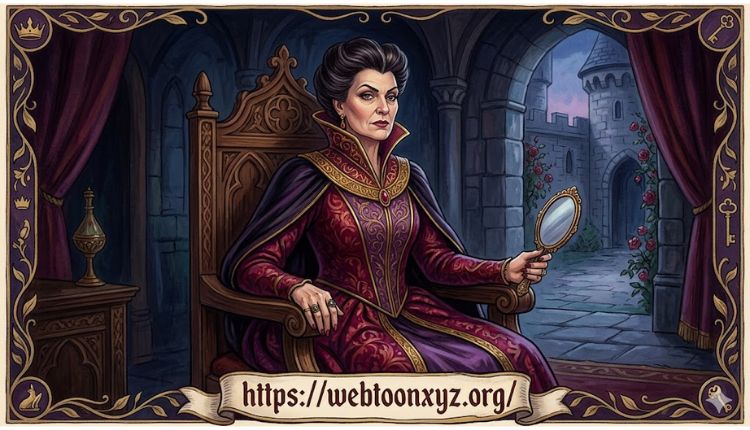
The story centers around a complex stepmother character whose role challenges traditional fairy tale stereotypes, offering readers a fresh and darker interpretation of family bonds, sacrifice, and survival. Unlike typical stories where stepmothers are portrayed as villains, this narrative reshapes expectations and presents layered personalities with emotional depth and realistic motivations.
The Stepmother Marchen presents a fantasy world inspired by classic fairy tales but rewritten with darker emotional tones and modern psychological depth. Unlike traditional stories where characters are clearly divided into good and evil, this narrative blurs those lines and introduces morally complex individuals. The stepmother figure is not simply an antagonist but a deeply developed character shaped by trauma, responsibility, and survival.
The story builds a world where family relationships are not idealized. Instead, they are shown as fragile bonds affected by loss, remarriage, and emotional conflict. This makes the narrative more realistic and relatable despite its fantasy setting. Readers are drawn into a world where every character has a hidden struggle, and every decision carries emotional weight.
The foundation of The Stepmother Marchen lies in its ability to reinterpret familiar fairy tale roles. It transforms a commonly feared archetype into a layered human being, making the reader question their assumptions about motherhood, love, and loyalty.
The Stepmother Character Development
The central focus of The Stepmother Marchen is the evolution of the stepmother character. She is portrayed as a woman forced into a difficult family situation, where  her role is defined by expectation rather than choice. Her personality develops gradually as the story reveals her past, her emotional struggles, and her motivations.
At the beginning, she may appear distant or strict, but as the narrative unfolds, her vulnerability becomes visible. She is not naturally cruel but is shaped by circumstances that demand emotional resilience. This transformation is one of the most important elements of the story.
Key aspects of her development include
- Emotional trauma from past experiences
- Pressure of maintaining family stability
- Conflict between personal desire and responsibility
- Gradual acceptance of her role as a caregiver
Her character challenges the traditional fairy tale image of a wicked stepmother. Instead, she represents a realistic human being trying to survive within difficult emotional boundaries.
Family Conflict and Emotional Struggle
Family conflict is at the core of The Stepmother Marchen. The story explores how blended families often struggle with acceptance, trust, and emotional connection. The relationship between the stepmother and children is not immediately warm, reflecting real-life challenges in stepfamily dynamics.
The emotional struggle is built on misunderstanding and fear. Children may see the stepmother as an outsider, while she struggles to earn her place in the family. This creates tension that drives the story forward.
- Important emotional elements include
- Loss and grief within the family structure
- Difficulty in building trust
- Miscommunication between characters
- Emotional distance that slowly changes over time
The story highlights how love in a family is not automatic but developed through patience and shared experiences. It also shows that emotional healing takes time and cannot be forced.
Symbolism in The Stepmother Marchen
Symbolism plays a major role in enhancing the depth of the narrative. The story uses fairy tale elements to represent psychological and The Stepmother Marchen. The stepmother figure itself is symbolic of misunderstood authority and emotional sacrifice.
The home setting often symbolizes emotional instability or transition. Changes in environment reflect internal changes in characters. Even silence and distance between characters carry symbolic meaning, showing emotional gaps that need healing.
Some symbolic elements include
- The stepmother representing misunderstood femininity and authority
- The household representing emotional imbalance
- Fairy tale references symbolizing distorted reality
- Emotional silence representing unresolved trauma
These symbols help the reader understand deeper meanings without directly stating them. The narrative uses symbolism to create emotional impact and psychological realism.
Psychological Depth and Character Motivation
One of the strongest aspects of The Stepmother Marchen is its psychological depth, know more information. Every character is driven by personal experience rather than simple good or evil classification. The stepmother’s actions are influenced by emotional survival, not cruelty.
Her motivation often comes from the need to protect stability within the family, even if her methods are misunderstood. This creates moral ambiguity that makes the story more engaging.
Psychological themes include
- Fear of rejection and failure
- Desire for acceptance
- Emotional defense mechanisms
- Inner conflict between kindness and authority
The story also shows how trauma can affect decision-making. Characters are not perfect, and their flaws are presented as natural consequences of their past. This makes the narrative more human and relatable.
Moral Ambiguity and Story Perspective
The Stepmother Marchen avoids simple moral labeling. Instead of presenting clear heroes and villains, it allows readers to interpret actions based on perspective. This moral ambiguity is one of the reasons the story stands out in modern fantasy storytelling.
The stepmother may be seen as strict or harsh from one perspective, but from another angle, she is protective and responsible. The story encourages readers to question judgment and empathy.
Key moral themes include
- Right and wrong depending on perspective
- The complexity of parenting roles
- Emotional survival versus emotional expression
- The blurred line between discipline and care
This layered morality makes the story intellectually engaging and emotionally challenging.
Narrative Style and Storytelling Approach
The storytelling style of The Stepmother Marchen combines fantasy elements with psychological realism. The narrative is often slow-paced, allowing deep character exploration. This helps readers connect with emotional transitions rather than just plot events.
Dialogue plays an important role in revealing hidden emotions. Small conversations often carry deeper meaning, showing tension or unresolved feelings. The writing style focuses on subtle emotional cues rather than dramatic action.
The structure of the story can be summarized as
- Introduction of emotional conflict
- Gradual development of trust issues
- Revelation of character backgrounds
- Emotional transformation and understanding
This storytelling approach makes the narrative feel more like a psychological drama within a fantasy setting.
Themes of Growth and Emotional Resolution
As the story progresses, themes of growth and emotional resolution become central. The Stepmother Marchen begin to understand each other, although full harmony is not always achieved. The stepmother’s journey represents emotional resilience and transformation.
Growth does not appear as a sudden change, but as a gradual process built up by experience. Emotional healing occurs through small moments of understanding rather than through dramatic events.
Key topics include
- Acceptance of imperfect relationships
- Emotional maturity through struggle
- Healing through understanding
- Redefining family ties
The story emphasizes that family is not defined by perfection, but by effort and connection over time.
Wrapping It Up
The Stepmother Marchen is a modern reinterpretation of the fairy tale that focuses on emotional complexity, psychological realism, and moral ambiguity. She transforms the traditional stepmother archetype into a deeply human character shaped by responsibility and emotional struggle. Through layered storytelling, symbolic depth, and realistic character development, the story challenges readers to rethink family roles and emotional judgment.
Its strength lies in showing that relationships are not simple and that understanding others requires patience and perspective. Ultimately, the story delivers a meaningful reflection on family, identity, and emotional resilience.
Wrapping It Up
What The Stepmother Marchen is all about?
It is a fantasy-inspired emotional story that focuses on the character of a stepmother and her complex family relationships.
Is she the stepmother in the story of the villains?
No, the story presents her as a morally complex character rather than a traditional villain.
What are the main themes of the story?
Key themes include family conflict, emotional struggle, moral ambiguity, and psychological development.
Why is the story popular?
It offers a fresh interpretation of fairytale roles with a deeper emotional and psychological narrative.
Does the story have a happy ending?
The story focuses on emotional growth and understanding rather than a purely traditional happy ending.
