A webtoon is a digital comic made to be read online, usually on a phone, with a vertical scroll layout. The format began in South Korea and is read through official platforms or independent sites.
If you have spent any time scrolling through comic recommendations online, you have run into the word “webtoon” more times than you can count. It gets thrown around loosely, sometimes as a brand name, sometimes as a whole category of comics. Both uses are technically correct, which is exactly why the term confuses so many first-time readers.
This guide breaks down what a webtoon actually is, how it differs from manga and manhwa, why the format took over mobile reading so quickly, and where you can go to read one without wasting an evening on dead links and pop-up ads.
What does “webtoon” mean?
A webtoon is a digital comic made specifically to be read by scrolling down a phone or tablet screen, rather than flipping through printed pages. The word itself is a mashup of “web” and “cartoon,” and it originated in South Korea in the early 2000s, when publishers started experimenting with comics built for browsers instead of print runs.
Over time, “webtoon” grew into two things at once. It is a format (vertical, full-color, mobile-first) and it is also the name of a specific platform, WEBTOON, that popularized the style worldwide. That overlap is why you will see people search for the general concept and the specific site interchangeably, and it is also why so many similarly named platforms and reader hubs have popped up around the term.
How do webtoons differ from manga and manhwa?
People new to digital comics often use these three words as if they mean the same thing, but the differences matter once you start picking a platform to read on.
Manga is the traditional Japanese comic format. It is drawn in black and white, read right to left, and formatted for printed pages that get flipped rather than scrolled.
Manhwa is the Korean equivalent of manga. Older manhwa followed the same page-based layout as manga, but most modern manhwa is now produced in the webtoon format: color, vertical, and built for a phone screen.
A webtoon, then, is really a delivery format rather than a nationality of comic. Japanese, Korean, Chinese, and even independent Western creators all publish in style now, which is part of why the genre variety on these platforms has exploded over the past few years.
Why did the vertical scroll take over?
Print comics were built around the physical constraints of a page. Panels had to fit a fixed rectangle, and the reader’s eye moved left to right, then down.
None of that works well on a phone. Vertical scrolling solves the problem by letting artists design a continuous strip that flows with your thumb instead of against it. It also opens up storytelling tricks that print comics cannot pull off easily, like a slow reveal that unfolds as you scroll, or a sudden jump-scare panel timed to appear right when you swipe.
This is a big part of why platforms built around comics similar to the original site, such as the ones covered in this breakdown of comics like Webtoon, keep multiplying. Once readers get used to scrolling instead of flipping, going back to a page-based reader feels clunky.
Which webtoon genres are worth exploring?
One of the real strengths of the format is genre range. A few categories consistently pull the biggest audiences:
- Romance, slow-burn relationships, workplace drama, fantasy love stories
- Fantasy and action, magic systems, tower-climbing plots, revenge arcs
- Horror and thriller, short-form dread built for a single sitting
- Slice of life, quieter, character-driven stories with lower stakes
- Manhwa specifically, often blends action with the reincarnation and “leveling up” tropes that took off after series like Solo Leveling
If you are curious specifically about the Korean side of this boom, there is a dedicated breakdown of Korean webtoon free reading options worth checking, since Korean-origin titles still dominate a lot of the trending charts.
Manhwa deserves its own mention here too. The genre has grown fast enough that it is often treated as a category on its own rather than a subset of webtoons in general, and there is a closer look at that trend in this guide to manwha toon content.
Where can you read webtoons online?
There are two broad routes: official platforms and independent reading sites.
Official platforms carry licensed content, pay creators directly, and typically use a “coin” or subscription system for early access to new chapters. This is the safest and most sustainable way to support the artists whose work you are enjoying.
Independent or aggregator sites mirror comics from multiple sources in one place. They can be convenient, but quality and reliability vary a lot from one site to the next, and it is worth reading a bit about a platform before committing your time to it. A good example of doing that homework is this rundown of Webcomics XYZ, which walks through what the site actually includes before you sign up for anything.
Because so many similarly spelled sites exist, typos and copycat domains are common in this space. If you searched for a slightly different spelling and landed here, it is worth double-checking you found the right one. Guides like WBTOON XYZ, Webtoons XY, and XYZ Webtoons exist specifically to clear up that confusion, since a single misplaced letter can send you to a completely different site.
Is reading webtoons free or paid?
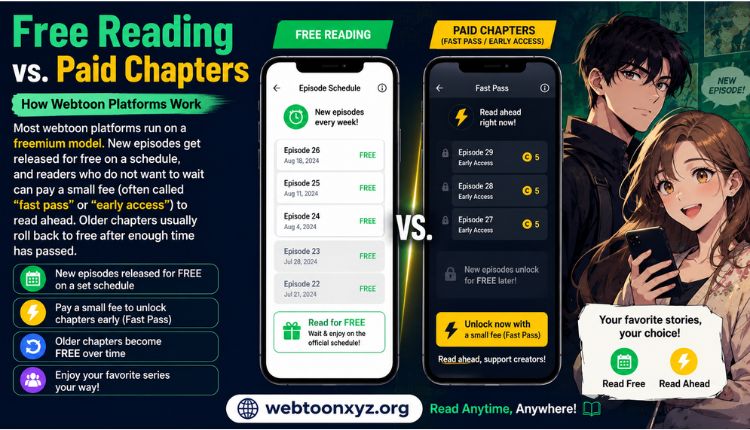
Most webtoon platforms run on a freemium model. New episodes get released for free on a schedule, and readers who do not want to wait can pay a small fee (often called “fast pass” or “early access”) to read ahead. Older chapters usually roll back to free after enough time has passed.
This system works well for casual readers who are fine waiting a week between episodes, and it also gives creators a direct revenue stream instead of relying entirely on ads. If you are trying to figure out whether a specific site’s free tier is actually worth using, it is worth reading a focused breakdown rather than guessing, and the Webtoon XYZ safety and usage guide is a solid starting point for exactly that question.
What should you do if you want to step away from an account?
Not every reader sticks with the same platform forever. Some people switch apps, some just want a break from notifications, and some are cleaning up old accounts they no longer use. If you have reached that point and are not sure where to start, there is a step-by-step walkthrough on deleting a webtoon account that covers the process without the runaround.
How to Choose a Reliable Platform
A few quick checks before you commit time to any new site:
- Look for a clear update schedule: Reliable platforms post new chapters on a predictable day, not “whenever.”
- Check whether the site credits the original creator: Sites that strip out author names are usually the ones running unlicensed mirrors.
- Test the mobile experience first: Since almost all reading happens on phones, a clunky mobile layout is a dealbreaker.
- See what other readers say: A quick search for the platform name plus “review” tells you a lot before you sign up.
Frequently Asked Questions
Is “webtoon” a brand name or a general term?
Both. It started as the name of a Korean digital comics platform and later became shorthand for the entire vertical-scroll comic format, regardless of which site hosts it.
Are webtoons the same as manhwa?
Not exactly. Manhwa refers to Korean comics broadly, and most current manhwa happens to be published in webtoon format, but the two words are not perfect synonyms.
Do I need to pay to read webtoons?
No. Most platforms release new episodes for free on a set schedule and only charge for early access to upcoming chapters.
Why do so many similarly named webtoon sites exist?
The format’s popularity created a wave of copycat domains and reader aggregators, many with near-identical names. Reading a quick overview of a specific site before using it helps you avoid the weaker ones.
For background on the format, see the Wikipedia entry on webtoons.
Frequently Asked Questions
What is a webtoon?
A webtoon is a digital comic designed for online reading, usually in a vertical scroll format that works well on phones.
Are webtoons free to read?
Many series are free to read on a schedule, while some platforms charge coins or subscriptions for early access to new chapters.
Is a webtoon the same as manhwa?
Not exactly. Manhwa is the Korean word for comics in general, while webtoon usually means a digital comic made for vertical scrolling.
Final Thoughts
Webtoons earned their popularity honestly. The vertical format fits how people actually use their phones, the genre range keeps growing, and creators from multiple countries are now publishing in the same style. The catch is that the term’s popularity also spawned a crowded field of similarly named sites, so a little bit of research before you pick a platform saves you a lot of wasted scrolling later.