Raw manhwa means Korean comics in their original language, before any fan or official translation. Reading raws is legally risky in many regions, and unofficial raw sites often carry aggressive ads.
If you’ve typed “raw manhwa” into Google, you’re probably not looking for a definition. You already have a series in mind, and you want to know why the raw version even exists, whether it’s different from what you’d get on an official app, and whether reading it is going to land you somewhere sketchy. Fair questions. Let’s get into them.
What does raw manhwa mean?
“Raw” is scanlation slang. A raw manhwa is the original Korean-language release, straight from the publisher or platform, before anyone has touched it with a translation, edited the text bubbles, or added English (or any other language) dialogue.
So when someone shares a “raw” chapter, they mean the Korean text is still sitting untouched inside the artwork. No English. No footnotes explaining a pun that doesn’t translate. Just the artist’s and letterer’s original work, exactly as Korean readers see it.
This matters because manhwa (the general term for Korean comics, distinct from Japanese manga) usually releases in Korea days, weeks, or sometimes months before an official English version shows up. Some series never get a licensed translation at all. Raws fill that gap, for better or worse.
Why do people search for raw manhwa?
There are a handful of real reasons, and they’re not all the same person:
They’re learning Korean: Reading raw material next to a translation is a classic language-study trick. You get vocabulary in context, plus visual cues from the art that a textbook can’t give you.
They want the newest chapter now: Official translations lag. If a series updates weekly in Korea but the English release comes out biweekly or monthly, raws are the only way to stay current without waiting.
Their favorite series isn’t licensed: Plenty of manhwa, especially older or more niche titles, never get picked up for official translation anywhere. Raw is the only version that exists in a readable digital form.
They’re comparing scanlations to the source: Some readers like to check whether a fan translation is accurate, or whether a joke got lost somewhere along the way.
None of these reasons are unusual. But they lead to very different reading experiences, which is where a lot of confusion starts.
What is the difference between raw, scanlated and official manhwa?
People throw these three terms around like they’re interchangeable. They’re not. Here’s how they actually stack up.
| Version | Language | Who Makes It | Speed | Legal Status | Accuracy |
| Raw | Original Korean | Publisher/platform (e.g., Naver, Kakao) | Fastest, matches Korean release schedule | Official when hosted by the original platform; often re-hosted illegally elsewhere | 100% accurate (it’s the source) |
| Scanlated (fan-translated) | Translated by fans, unofficial | Volunteer scan groups | Fast, but depends on group activity | Almost always unlicensed and unauthorized | Varies a lot by group, ranges from excellent to rough |
| Official Translation | Translated by the licensed publisher | Webtoon, Tapas, Lezhin, and similar platforms | Slower, tied to licensing deals | Fully legal | Consistently accurate, professionally edited |
The practical takeaway: if you can read Korean, the raw is the real deal, and there’s nothing wrong with reading it on the platform that published it. If you can’t read Korean and you’re pulling raws from a random re-upload site, you’re not actually getting anything useful out of them, and you’re also probably on a site that’s hosting the content without permission.
Is reading raw manhwa legal?
Depends entirely on where you read it.
Reading a raw chapter directly on Naver Webtoon, Kakao Page, or another official Korean platform is completely legal. You’re viewing licensed content on the site that owns it. Some of these platforms even let you switch regions or use a VPN to access their catalog, though pricing and availability shift depending on your location, Visit more.
The problem shows up when raws get scraped and reposted on third-party aggregator sites that have zero connection to the original publisher. That’s unauthorized distribution, plain and simple, and it’s the same legal gray zone (often not so gray) that scanlation sites operate in. The artists and writers who made the manhwa don’t see a cent from those page views.
If you genuinely want to support the creators, the safest path is reading through the original platform or through licensed English apps once a series does get picked up. If a title you’ve been following raw eventually lands an official release, that’s usually a good sign, and worth switching over to.
How do people read raw manhwa without getting lost?
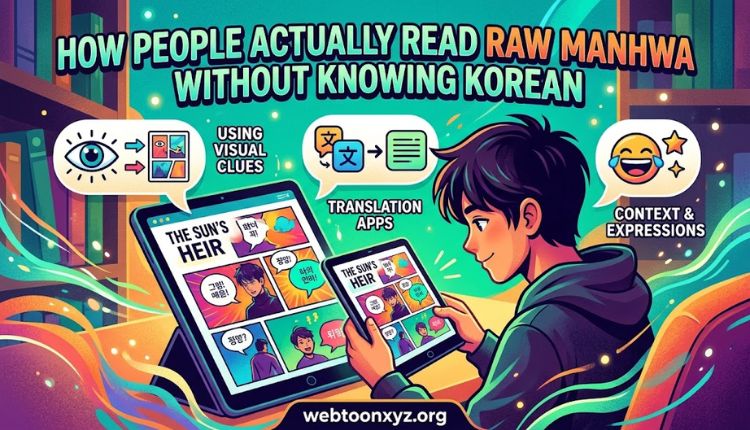
This surprises people, but a decent chunk of “raw readers” don’t speak a word of Korean. They’re using tools to bridge the gap:
- Browser translation extensions that overlay Korean text with a rough English translation as you scroll. Not perfect, but usually good enough to follow the plot.
- OCR translation apps (point your phone camera at the screen, get instant translated text) work reasonably well for printed dialogue, less well for stylized fonts or sound effects.
- Google Lens, used the same way, screenshot by screenshot.
- Community translation notes, where readers who do know Korean post rough summaries or partial translations of raw chapters as a stopgap until the official release.
None of these give you a polished reading experience. Machine translation still mangles idioms and honorifics constantly. But for readers who can’t wait, it’s a workable middle ground.
What should you watch out for on unofficial raw sites?
A lot of the sites hosting scraped raws make their money through ad networks, and not the polite kind. Expect pop-ups, redirect chains, and the occasional fake “download” button. A few practical habits help:
- Keep an ad blocker running. It won’t fix everything, but it cuts down the worst of the redirect spam.
- Never install a browser extension or app that a raw-hosting site tells you is “required” to keep reading. That’s a common malware vector.
- If a site asks for payment info to view free content, close the tab. Legitimate raws on official platforms use in-app coins or straightforward subscriptions, not surprise card forms on a comic-reading site.
- Watch for sites that reload endlessly or redirect you off-page mid-chapter. That’s usually a sign the site cares more about ad impressions than the reading experience.
None of this is meant to scare you off reading manhwa. It’s just the same common sense you’d apply to any site that isn’t the original publisher.
Which manhwa are worth knowing if you explore raws?
A few series come up constantly in raw-manhwa communities, either because they update fast in Korea or because fans are hungry enough to track them chapter by chapter. If you’re new to this corner of manhwa fandom, series like Player Manhwa and Jungle Juice Manhwa are good examples of titles with active, engaged fanbases that regularly discuss raw chapters ahead of translated releases. Reading up on how these communities track and discuss new chapters gives you a sense of how the whole raw-to-scanlation-to-official pipeline actually functions in practice.
Why do raw manhwa site names look so similar?
If you’ve been searching around, you’ve probably noticed there’s a small galaxy of similarly named sites: Webtoon XYZ, Wentoons XYZ, Webtoonz Cyz, Webtoons Xuz, and a few more variations on the same theme. It’s easy to end up on the wrong one by typo alone.
Before you settle on a source for raws or scanlations, it’s worth taking a minute to understand what each of these sites actually offers and how they differ, since they’re not all the same operation despite the near-identical names. If you’d rather stick with something built specifically for Korean-language raws, Korean Webtoon Free is another option worth comparing.
FAQs
Is “raw manhwa” the same as “manga raw”?
No. Manga is Japanese, manhwa is Korean, and the two industries have different publishers, platforms, and release schedules. The term “raw” applies to both, though, meaning the untranslated original.
Can I read raw manhwa for free legally?
Yes, if you’re reading it on the platform that actually published it, like Naver Webtoon or Kakao Page. Many series are free to read with ads or a coin system, even in Korean.
Why do raw chapters come out before the English version?
Licensing and translation take time. The Korean release schedule doesn’t wait for that process, so raws are always going to be ahead unless a publisher does a simultaneous release, which does happen occasionally with bigger titles.
Do I need to know Korean to enjoy raw manhwa?
Not necessarily. Translation apps and browser extensions get you a rough version of the dialogue. It won’t be as smooth as an official translation, but it’s enough for a lot of readers to follow along.
Is it worth switching to the official translation once one comes out?
Generally, yes. Official translations are edited, consistent, and the money actually reaches the people who made the series. If you’ve been reading raw just to keep up, switching over once there’s a licensed release is worth doing.
Where can I read manhwa translated properly instead of raw?
Licensed apps like Webtoon, Tapas, and Lezhin Comics carry official English translations for a large chunk of popular titles, and new licenses get added regularly. For background on the format, see the Wikipedia entry on webtoons .
Conclusion
Raw manhwa isn’t some shady underground category. It’s just the original, untranslated version of a comic, and the reasons people seek it out (staying current, studying Korean, chasing a series with no English license) are pretty reasonable on their own.
Where it gets complicated is the platform you’re reading it on. Stick to the official source, or wait for a licensed translation, and you’re supporting the people who actually made the thing you’re enjoying. Everything else is just a workaround, and workarounds come with trade-offs worth knowing about before you rely on them.